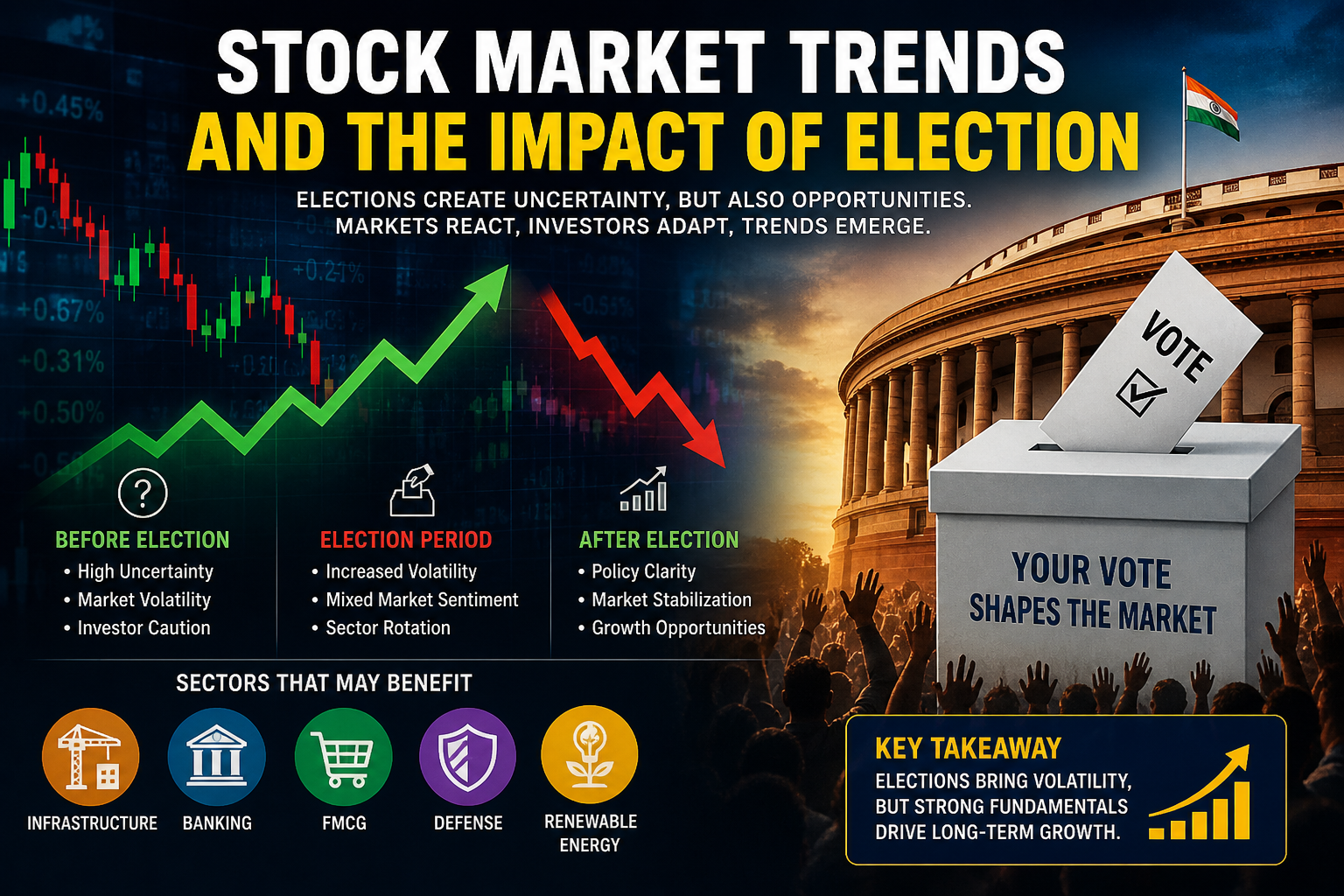
Financial markets have a distinctive stage with elections, which can cause a sudden change in stock prices. With the changing political discourses and the unpredictability of the outcome, investors are keenly following changes that may affect the economic policies. This is generally a volatile, speculative, and swiftly changing market sentiment time.
The success of stock markets is based on predictability and stability. Elections are one such factor that is disruptive to this balance by providing a variety of possible scenarios. The various political parties have various economic agenda that may include taxation and spending, reforms and regulations. Consequently, investors start modifying their portfolios according to the expectations and not the established policies, thus resulting in constant price changes.
A market rally with a stable government in view is one of the most prevalent trends during the elections. When the investors are convinced that one party or a powerful group will have a strong majority, the confidence can be high. Stability implies stability in economic policies, governance and quicker decision making.
This optimism usually leads to purchasing in the areas of infrastructure, banking, and capital goods. Investors are hoping on long-run growth, higher government expenditure and continuous reforms. This can lead to the stock markets starting to increase prior to the final results announced in the election, as the positive mood and expectations.
Conversely, markets respond adversely when there is uncertainty or division in election results. A weak coalition government or a hung parliament creates the worry of lack of policy paralysis and reforms being slow. Investors are concerned about erratic decision-making and lower economic impulse.
During elections, the investor sentiment is a strong force. Both local and foreign institutional investors are very observant of political events and reposition their investments. Foreign institutional investors especially are more inclined towards stable political environments. Any instability will result in a capital flight which will exert more strain on the market.
On the contrary, a sharp and robust mandate can tend to attract new investments, increasing liquidity and promoting market expansion. This avalanche of money is a key determinant of market movements and their direction and power during and after elections.
Markets are normally volatile and speculative before elections. This is the period of short-term traders, who exploit price fluctuations. Long-term investors might be waiting to see.
Once the election outcomes have been announced, the market direction is more clear. A positive performance can result in long-term rallies, whereas an unpredictable performance can keep the markets down. Early post-election announcements of policy and government activity also influence investor confidence.
Elections also play a major role in the market trends of stocks as they determine the expectations and economic perspective of the investors. Whereas stability and clarity of mandates are likely to strengthen markets, uncertainty and outcomes that are fragmented can drive downfalls. This knowledge of such trends can enable investors to navigate political volatility, and make better decisions during this critical time.

