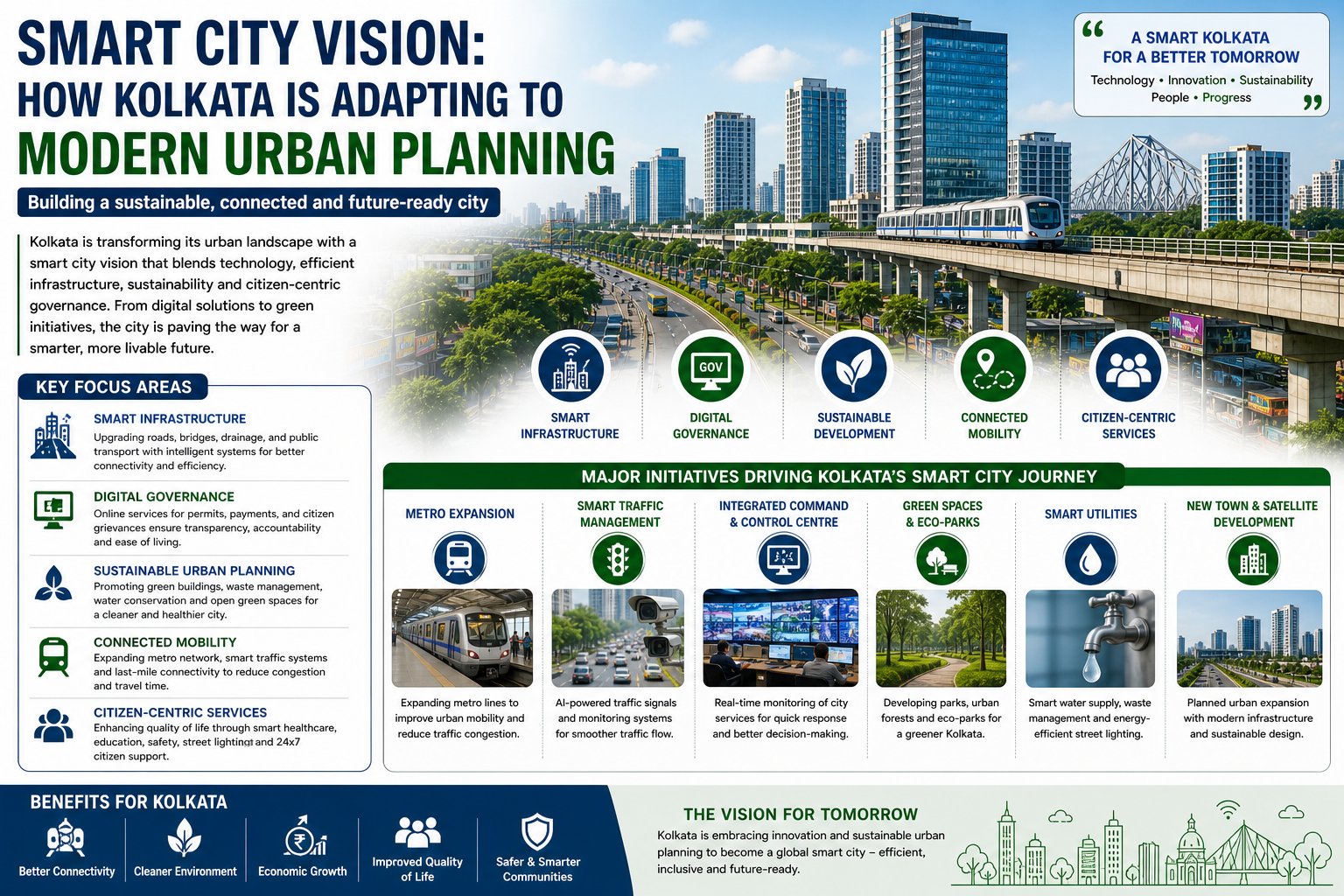
Kolkata, one of the oldest metropolitan cities in India, is gradually changing the urban model to suit the Smart City concept. As population pressure, infrastructure requirements and requirements of sustainable growth continue to rise, the city is emerging with modern urban planning strategies that incorporate the use of technology, efficiency, and citizen-centric development. With current government efforts, Kolkata is becoming less traditionally organized city and more connected, resilient, and future ready urban space.
Another crucial part of the Smart City transformation in Kolkata is the creation of smart infrastructure. This involves better road networks, smarter traffic management systems as well as better connectivity of public transport. The growth of metro rail services and the deployment of smart traffic lights are also contributing to the reduction of congestion and enhancing mobility. Also digitalized monitoring systems are being employed to control utilities like water supply, waste disposal and street lights in a more efficient manner.
Digital transformation is increasingly becoming an important aspect of contemporary urban planning. The services provided by the government in Kolkata are now being offered online thus making the processes more transparent and accessible. Digitization saves paperwork and delays and enhances accountability by means of property tax payments, building approvals and so on. Another aspect of smart governance is that it facilitates improved data collection and analysis, which aid the authorities in making informed decisions in the development of the city.
The Smart City concept of Kolkata focuses on the concept of sustainability. Sustainable planning activities are also including green practices like the use of green building standards, rainwater harvesting and an efficient waste management system. Development plans are being incorporated with open green spaces, eco-parks and conservation projects around the water bodies to enhance the quality of the environment. These projects are meant to establish a compromise between urban development and the ecological conservation.
The smart urban planning is an emerging trend in Kolkata with areas such as New Town and Rajarhat being the top examples of this practice. These areas are being built using modern infrastructure, broad roads, planned designs and residential and commercial spaces. With IT hubs, smart utilities, and improved connectivity, these areas are the future of urban living in the city. The emphasis on the development of satellites assists in alleviating overcrowding in central Kolkata and facilitating even-spread growth.
The Smart City vision is not just about infrastructure to enhance the general living standards of the inhabitants. Improved health centers, schools and recreational areas are being integrated in urban planning. Surveillance systems and better lighting of streets are some of the safety measures that help to create a safer environment.
The city is establishing the groundwork of long-term development through the integration of technology, infrastructure improvement, and the need of citizens. Nonetheless, with a few challenges, the Smart City vision is becoming more and more efficient, connected, and future-ready urban centre of Kolkata.

