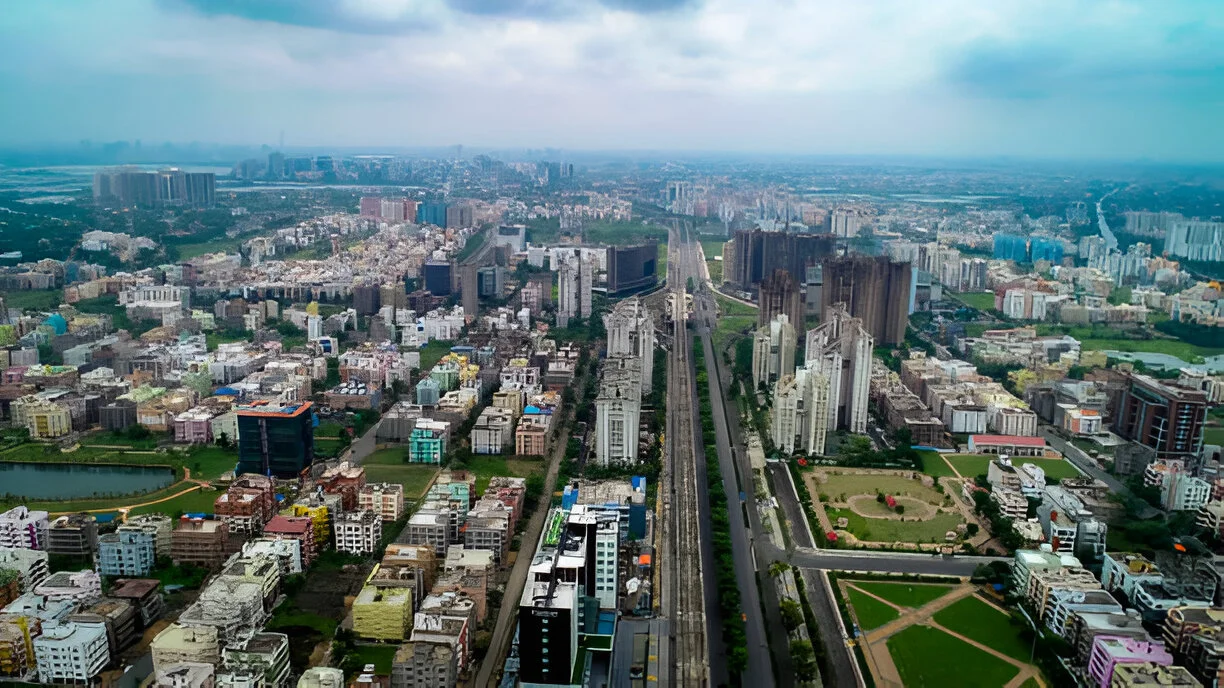
Infrastructure continues to be the most powerful catalyst shaping Kolkata’s real estate trajectory in 2026. Large-scale investments in transport, utilities, and civic services are not only improving daily mobility and livability but are also redefining demand patterns and influencing property valuations across the metropolitan region. Unlike short-term market factors, infrastructure-led growth is creating structural, long-lasting impact on both residential and commercial real estate.
The ongoing expansion of Kolkata’s metro network is transforming connectivity across North, East, and South Kolkata. New lines and extensions are bringing previously peripheral locations into the city’s economic mainstream, significantly reducing travel time to employment hubs. As metro access improves, residential demand is shifting toward areas that now offer faster and more predictable commutes.
Micro-markets located within walking distance of metro stations are consistently commanding price premiums. Buyers are increasingly willing to pay higher rates for the convenience and reliability that metro connectivity offers. Even in corridors where construction is still underway, the anticipation of future connectivity has already influenced buyer interest, land acquisition strategies, and early-stage pricing. For working professionals and families alike, proximity to metro infrastructure has become a decisive factor in home selection.
Beyond transport, improvements in water supply, drainage systems, and urban utilities are playing a crucial role in enhancing livability across Kolkata. Upgraded treated water supply and better drainage infrastructure have addressed long-standing issues in older neighborhoods while supporting sustainable growth in newer suburbs.
Reliable civic services directly affect long-term property value by improving habitability and reducing risks related to waterlogging, maintenance, and service disruptions. As buyers become more informed, infrastructure quality is increasingly viewed as a core component of property evaluation rather than a secondary consideration.
Developers are also responding to this shift. Project planning in 2026 is increasingly focused on zones with assured civic infrastructure, where utilities and services are already in place or clearly committed. This approach reduces execution risk and improves buyer confidence, steering development away from purely speculative locations with uncertain infrastructure timelines.
Road infrastructure upgrades are further strengthening Kolkata’s urban mobility. Road widening projects, new flyovers, and improvements to arterial corridors have enhanced both east–west and north–south connectivity. These upgrades are particularly important for suburban housing growth, as they enable daily commuting from relatively lower-cost residential zones to central business districts and employment hubs.
Infrastructure-led appreciation is most visible in corridors that link major employment hubs with emerging residential zones. Areas such as New Town, Rajarhat, the southern suburbs, and select northern pockets are benefiting from this alignment of connectivity and job access.
Importantly, infrastructure development does more than drive price appreciation. It reduces market volatility by anchoring demand in real usability and long-term growth potential. As a result, infrastructure-backed micro-markets in Kolkata are proving to be more resilient, reinforcing the city’s reputation for stable and sustainable real estate growth in 2026.

