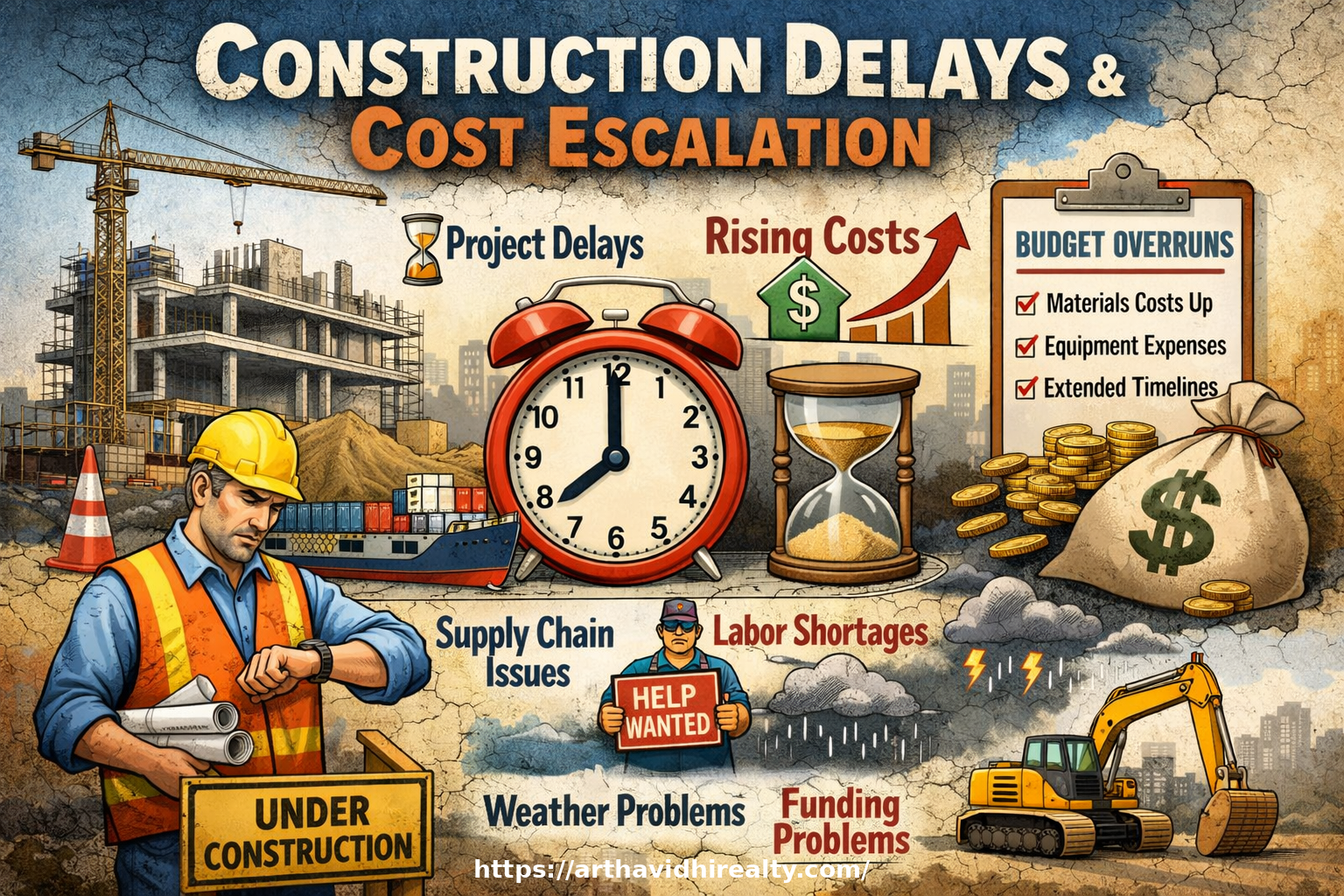
Geopolitical instability and war have ripple effects on industries and the real estate industry is one of the most susceptible industries because of its reliance on global supply chains, availability of labor and material costs. Current and under-construction projects are becoming more and more challenging with delays and escalating costs in 2026 directly affecting developers and homebuyers.
Among the main causes of construction delays in the war-time scenarios, there is a disruption of global supply chains. Most construction materials like steel, aluminum, electrical fittings and specialized fittings are imported or require global logistics.
The supply of such materials is not predictable when there are conflicts to key exporting nations or ships routes. Procurement delays cause delays in the timelines of the project, and the developers need to stop or re-plan the construction processes.
Inflationary pressures are usually a result of war, particularly on basic commodities such as fuel, metals and cement. Transportation cost is raised by the rise of fuel prices and the constrained trade will further raise the cost of imported materials.
Consequently, the cost of construction is increased drastically among developers. The main components of any real estate project, steel and cement, usually experience a steep increase in price during such times. These higher costs are either passed on to the developers, who in turn affect the profitability or transferred to the buyers in the form of higher prices of the property.
Another important factor that is affected during crisis is labor availability. The migration habits alter when the workers move back to their native towns or move to other secure areas of employment. Moreover, economic uncertainty may also decrease the supply of skilled labor to do specialized construction jobs.
The workforce shortage reduces the rate at which the project can be completed resulting in missed deadlines and prolonged delivery schedules. In large scale developments, any minor hit in the availability of the workforce can have a huge effect on the development.
Long project timelines are usually occasioned by delays due to supply and labor issues. Construction projects that are under-built are particularly prone to this kind of failure since they depend on the constant flow of work and the timely deliveries of materials.
Investors in such projects might have to wait longer before they obtain possession and this may be a strain on the pocket- especially when they are paying rent and the home loan EMIs at the same time. The uncertainty also influences the confidence of buyers in the under-construction segment.
Increase in cost and delays exert significant financial pressure on developers. Cash flow may be strained by increased input costs and decreased sales in the uncertain times.
There is also a possibility of developers being forced to raise more funds to finish projects, and this increases the cost of borrowing. In other scenarios, smaller or less-established constructors might have problems in keeping timelines, which poses a further risk to buyers.
In order to deal with an increase in the cost, developers tend to adjust the prices of properties particularly those which are still under the first or middle construction stages. This can render houses unaffordable to new entrants in the market.
Simultaneously, current purchasers will have to deal with alterations of payment dates or extra expenses in some scenarios. This is the atmosphere that causes buyers to scrutinise the project developments, the credibility of the developer and the financial terms of the project before committing themselves.
With these risks, most buyers start to favor ready-to-move-in properties compared to the under-construction ones. Finished projects remove the doubts in terms of time loss and cost increase and provide instant ownership and financial transparency.
There are however, reputed developers who have good track records, they still attract buyers because they are seen to be more in a position to handle challenges efficiently.
The real estate industry is slowly adjusting to these predicaments. Project developers are looking at sourcing materials locally, construction technologies, and better project planning to decrease reliance on unstable supply chains.
Financial discipline and transparency is also increasingly being given consideration to ensure that the buyers trust them in moments of uncertainty.
Among the most important effects of war on the real estate industry, one can distinguish construction delays and cost escalation. The broken supply chains, the increased prices of materials, and the lack of staff makes the situation difficult both to the developers and to the buyers.
Although in the short-term, these challenges can slow down the completion of the project and raise its price, the adaptability and innovativeness of the industry will be instrumental in the preservation of the stability over time.

