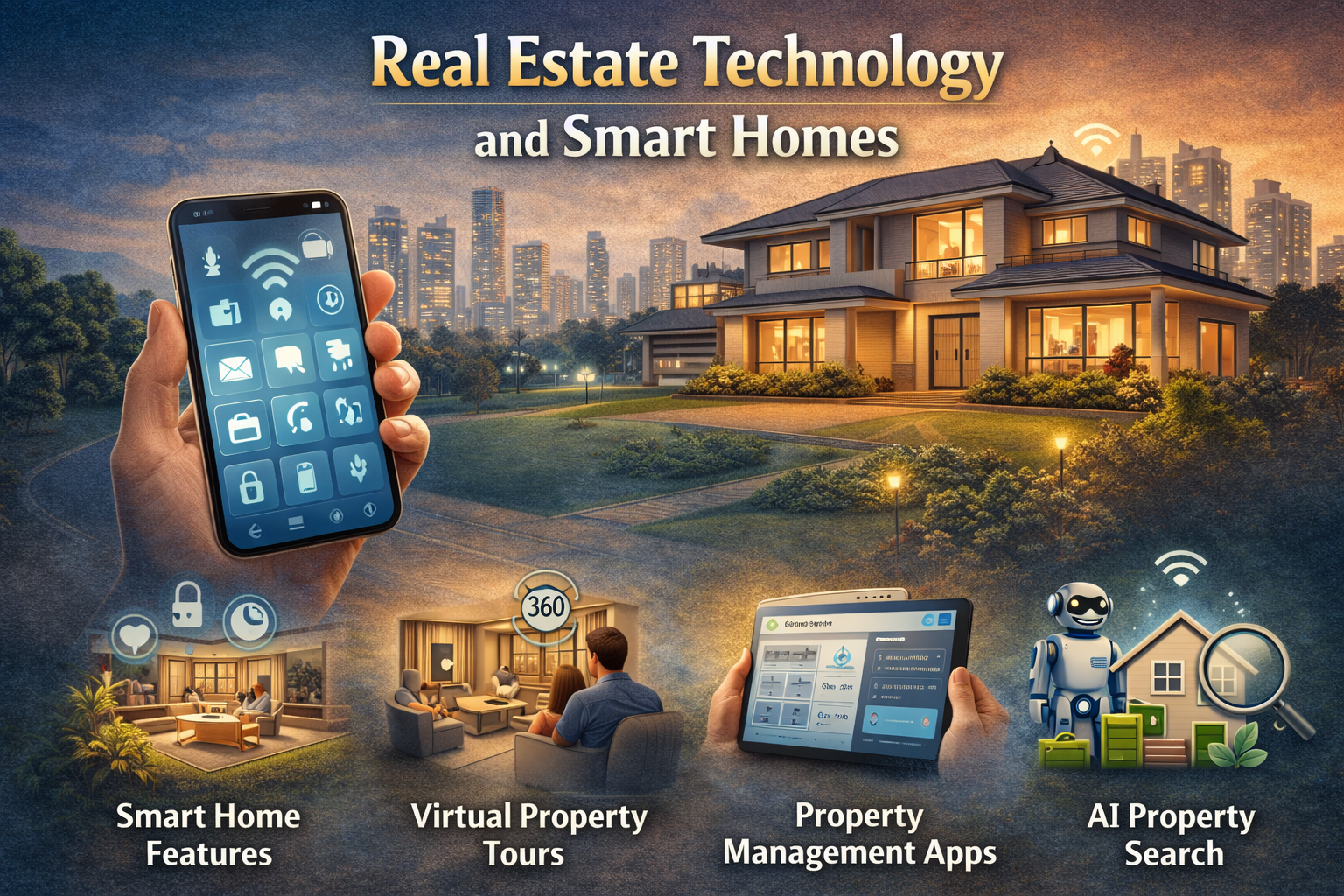
The real estate industry is undergoing a revolution that is being brought about by technology that is changing the way people find, purchase and manage properties. As digital instruments and smart technologies develop, buyers and developers are enjoying a smoother and convenient property market. So-called PropTech is real estate technology that is facilitating the smoothing of processes and overall experience of homeowners, investors, and real estate professionals.
The concept of the smart homes is presenting one of the most appealing attributes in the contemporary real estate. It is in these homes that there are connected gadgets and automation that allows the occupants to turn on or off lighting, heating, security, and appliances via smartphones or voice recognition. The characteristics like smart door lock, auto-lighting, and smart thermo-stat give convenience and energy-saving features. Most new residential projects are now fitting these technologies as a norm and making houses more comfortable and secure.
Virtual property tours are one of the largest technological developments that have taken place in the real estate. It also allows potential buyers to have a 3D walkthrough, video tours and interactive online listing of homes without necessarily going to the home. The technology saves time on both the side of the buyer and the sellers and facilitates more product search on property. Virtual tours have gained a lot of popularity with buyers who are moving to new locations or countries and prefer viewing several properties at the comfort of their homes.
House owners and landlords are also finding it easier to manage the management of their property through technology. Current property management applications enable their users to monitor maintenance, rental payments, contact with tenants, and control building services. To the citizens of housing societies, the applications are used to control who enters or leaves their homes, reservation of facilities, and requests of services. This online system enhances efficiency and makes the process of communication between residents, property managers, and maintenance teams easier.
The use of artificial intelligence in improving property search websites is increasing. Artificially intelligent-based systems use user preferences, budget, location and browsing interests to suggest ideal properties. These smart systems assist buyers in locating houses that suit their needs at a faster rate. The real estate companies also apply AI based analytics to comprehend the market trends, buyer preferences and pricing pattern to make better business decisions.
Smart surveillance systems have also been introduced as a form of security technology has improved significantly. Smart cameras, motion sensors, video door phones, and remote monitoring are some of the features that allow home owners to have more control over their homes in terms of security.
To sum up, technological advancement in real estate and smart home technologies is changing how individuals acquire, sell, and operate houses. This is transforming real estate to be more accessible, efficient and convenient and enhancing the overall living experience of the modern home.

